Pouring Oil in the Next Generation

Pouring Oil in the Next Generation
1 Samuel 16:1–13
David Anointed King
16 Now the Lord said to Samuel, “How long will you mourn for Saul, seeing I have rejected him from reigning over Israel? Fill your horn with oil, and go; I am sending you to Jesse the Bethlehemite. For I have provided Myself a king among his sons.”
2 And Samuel said, “How can I go? If Saul hears it, he will kill me.”
But the Lord said, “Take a heifer with you, and say, ‘I have come to sacrifice to the Lord.’ 3 Then invite Jesse to the sacrifice, and I will show you what you shall do; you shall anoint for Me the one I name to you.”
4 So Samuel did what the Lord said, and went to Bethlehem. And the elders of the town trembled at his coming, and said, “Do you come peaceably?”
5 And he said, “Peaceably; I have come to sacrifice to the Lord. Sanctify yourselves, and come with me to the sacrifice.” Then he consecrated Jesse and his sons, and invited them to the sacrifice.
6 So it was, when they came, that he looked at Eliab and said, “Surely the Lord’s anointed is before Him!”
7 But the Lord said to Samuel, “Do not look at his appearance or at his physical stature, because I have refused him. For the Lord does not see as man sees; for man looks at the outward appearance, but the Lord looks at the heart.”
8 So Jesse called Abinadab, and made him pass before Samuel. And he said, “Neither has the Lord chosen this one.” 9 Then Jesse made Shammah pass by. And he said, “Neither has the Lord chosen this one.” 10 Thus Jesse made seven of his sons pass before Samuel. And Samuel said to Jesse, “The Lord has not chosen these.” 11 And Samuel said to Jesse, “Are all the young men here?” Then he said, “There remains yet the youngest, and there he is, keeping the sheep.”
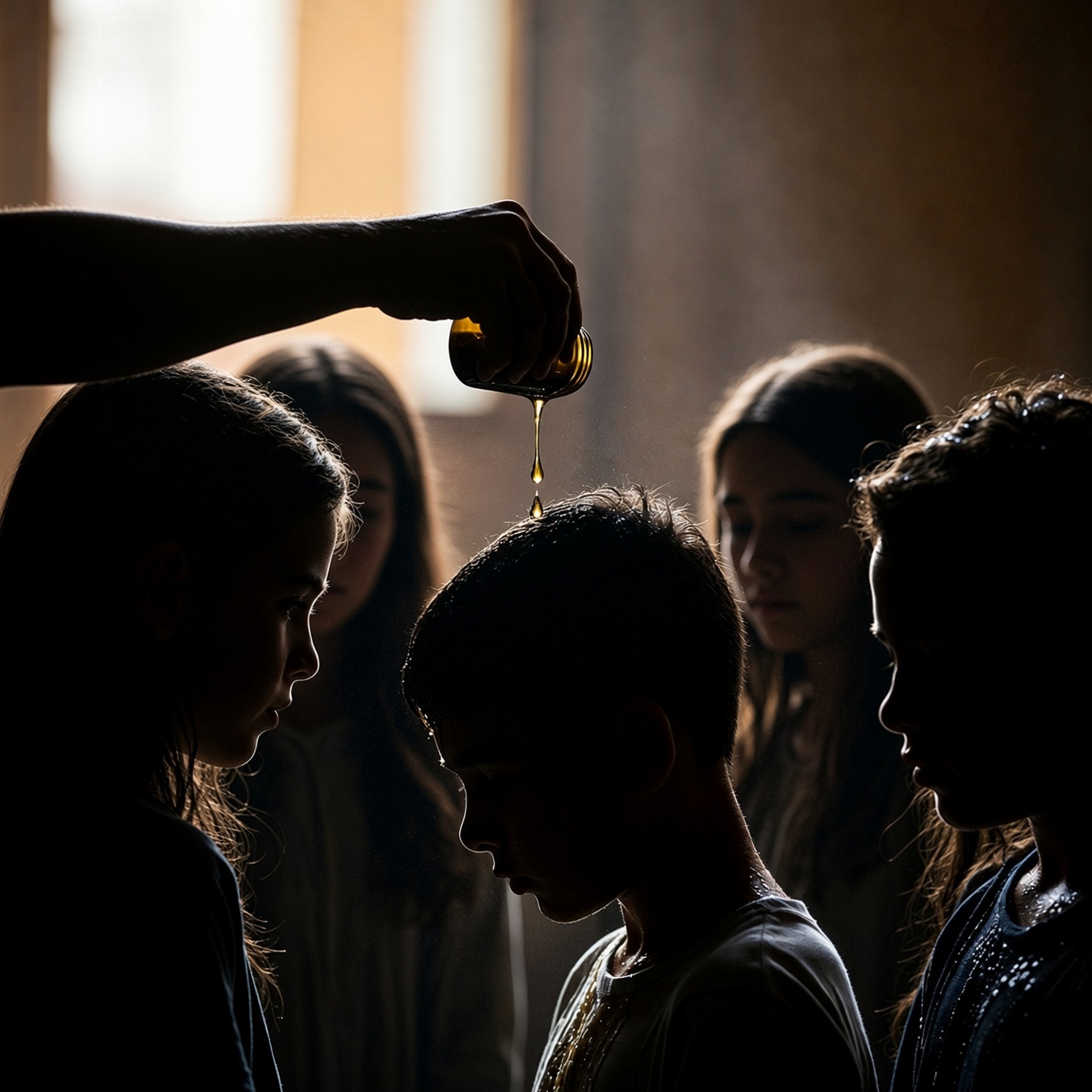
And Samuel said to Jesse, “Send and bring him. For we will not sit down till he comes here.” 12 So he sent and brought him in. Now he was ruddy, with bright eyes, and good-looking. And the Lord said, “Arise, anoint him; for this is the one!” 13 Then Samuel took the horn of oil and anointed him in the midst of his brothers; and the Spirit of the Lord came upon David from that day forward. So Samuel arose and went to Ramah.
There is a burden upon my heart for this generation, and it is not simply that they would learn how to have church. It is not merely that they would become good singers, powerful preachers, gifted musicians, or talented ministers. My burden is that they would come to know the living God for themselves. We are raising a generation surrounded by religious activity, yet activity alone cannot produce intimacy with God.
We can teach them the songs, show them how to worship, instruct them in the Scriptures, and bring them into an atmosphere where the presence of God is honored. But there is something we cannot do for them. We cannot surrender their hearts. We cannot pray their prayers of repentance. We cannot walk their obedience. And we cannot give them our personal history with God.
I believe there is oil for this generation. I believe God is still calling young men and women, still raising servants, still empowering believers through the Holy Spirit, and still preparing people whose names may not be known beyond their own families. But I am concerned that we have sometimes confused spiritual excitement with spiritual maturity. We have mistaken talent for anointing, religious familiarity for intimacy, and public recognition for divine authorization.
We have become so impressed with what people can do before a congregation that we sometimes fail to ask who they are when the congregation goes home. Yet the anointing of God was never intended to become a trophy displayed before men. It is a sacred trust to be stewarded before the Lord.
There is a cry rising in my heart:
“Lord, give us a generation that knows You! Not merely a generation that knows about the altar, but one that understands surrender.”
Not merely a generation that knows the language of Pentecost, but one that hungers for the Holy Spirit. Not merely a generation that can repeat the testimonies of their fathers and mothers, but one that develops a testimony of its own.
Because there is coming a day when the spiritual fathers will not be standing beside them, the mothers will not be there to lead every prayer, and the shepherds will not be present to guide every decision. When that day comes, will they know how to stand before God for themselves?
Samuel Had the Oil, But God Had the Choice
In 1 Samuel 16, the Lord spoke to Samuel after Saul had been rejected as king. God instructed Samuel to fill his horn with oil and go to Jesse the Bethlehemite, because He had provided Himself a king among Jesse\'s sons. Samuel was a mature prophet. He had heard the voice of God, served the Lord faithfully, and carried tremendous responsibility in Israel. Yet even Samuel did not know which son God had chosen until the Lord revealed him.
When Eliab stood before Samuel, the prophet looked upon him and thought surely the Lord\'s anointed was standing before him. Eliab had the outward appearance of someone who could lead. But the Lord corrected Samuel and reminded him that man looks upon the outward appearance while God looks upon the heart. What a lesson for every spiritual father and mother! We can see talent, confidence, personality, and ability, but God sees what is hidden beneath the surface. We may recognize potential, but only God perfectly knows the heart.
One by one, Jesse\'s sons passed before Samuel, and the Lord did not identify them as His choice. Samuel had the oil, but he could not pour it according to his own preference. He could not choose the tallest, the strongest, or the most impressive. He had to wait upon God. And I believe there is a word here for those entrusted with preparing the next generation: just because someone desires a mantle does not mean we have been authorized to place one upon them. Just because someone can preach does not mean they are ready to shepherd. Just because someone has a gift does not mean their character has finished developing.
Revelation is not authorization, and potential is not the same as preparation.
Then Samuel asked Jesse a question that ought to trouble every spiritual leader: \"Are all the young men here?\" Jesse answered that the youngest remained, and he was keeping the sheep. David was not standing in the house waiting to be recognized. He was in the field fulfilling the responsibility already given to him. While his brothers were being presented before the prophet, David was faithfully tending his father\'s flock.
Oh, church, do not overlook the field! There may be young people serving quietly who have never asked for a microphone. There may be sons and daughters learning obedience in ordinary responsibilities while others are seeking recognition. There may be those whose names are not being called publicly, yet whose lives are being shaped through faithfulness. David did not know everything that awaited him, but God knew where he was.
Samuel refused to complete the occasion without bringing David from the field. When David arrived, the Lord identified him, and Samuel anointed him in the midst of his brothers. The Spirit of the Lord came upon David from that day forward. Yet David did not immediately sit upon the throne. There would still be a giant to face, a jealous king to endure, caves to inhabit, and years of testing before the fullness of his royal responsibility unfolded.
The oil was real, but the preparation was not finished.
There is a difference between being chosen and being fully developed. There is a difference between receiving an anointing and learning how to carry its responsibility. And there is a difference between the moment God calls a person and the years through which He shapes that person\'s character.
There Were Borrowed Vessels, But No Borrowed Oil
Now come with me to 2 Kings 4. A widow cried out to Elisha because her husband had died and the creditor was coming to take her two sons as slaves. She was facing a desperate situation, and Elisha asked her what she had in the house. She answered that she had nothing except a jar of oil.
Sometimes we become so overwhelmed by what we lack that we fail to recognize what God can do with what remains. The widow did not possess a great supply. She had a little oil. But under the prophetic instruction given through Elisha, that little became the starting point of an extraordinary provision.
Elisha instructed her to go and borrow vessels from her neighbors, empty vessels, and not just a few. Then she was to go inside, shut the door behind herself and her sons, and begin pouring the oil into the vessels. She obeyed, and the oil continued flowing until every available vessel had been filled. When there were no more vessels, the oil ceased. The provision was sufficient for her to sell the oil, pay her debt, and live with her sons upon what remained.
Now I want you to notice something. The widow borrowed the vessels, but the account does not say she borrowed the oil. The little oil she already possessed was multiplied through God\'s miraculous provision.
There were borrowed vessels, but no borrowed oil!
Now, I understand that this passage is primarily about God\'s provision for a widow in desperate need. It is not a direct teaching about the Holy Spirit being transferred between believers. But it gives us an illustration worth considering.
Others can help us make room for spiritual growth. A pastor can teach us. A mother can pray with us. A spiritual father can mentor us. A congregation can surround us with encouragement. They can help provide opportunities, instruction, correction, and support. But no one can surrender our lives to Christ on our behalf.
I can teach you where the altar is, but I cannot make your heart surrender. I can show you how to pray, but I cannot develop your personal communion with God for you. I can pour instruction into your life, but I cannot live your obedience. I can help prepare you for responsibility, but I cannot carry your faithfulness.
The widow also had to obey the instruction she received. She had to gather the vessels, close the door, and begin pouring. God provided the miracle, but she responded in faith.
And there is something beautiful about the closed door. The miracle did not require a public audience. There was no crowd applauding as the oil flowed. There was a widow, her sons, empty vessels, and the provision of God.
Sometimes the most important things God develops in our lives are formed where nobody is watching.
Matthew 25:1–13
The Danger of Borrowed Oil — The Ten Virgins
There Were Borrowed Vessels, But No Borrowed Oil
Now let us move into Matthew 25. Jesus told a parable about ten virgins who took their lamps and went out to meet the bridegroom. Five were wise and five were foolish. All ten had lamps. All ten were waiting for the bridegroom. All ten became drowsy and slept while the bridegroom was delayed. But there was a difference between them. The wise had taken additional oil, while the foolish had not made adequate preparation.
At midnight, a cry was heard announcing the bridegroom\'s arrival. The virgins arose and prepared their lamps. But the foolish discovered that their lamps were going out. They turned to the wise and asked them to share their oil.
And the wise answered that there might not be enough for both groups, telling them to go and buy for themselves. While the foolish were away, the bridegroom arrived. Those who were ready entered the wedding, and the door was shut.
Jesus concluded the parable with a warning to watch, because we do not know the day or hour.
The central teaching of this parable is readiness for the coming of the Lord. We must be careful not to turn every detail into a separate doctrine. Yet the oil provides a powerful picture of the preparation that could not simply be borrowed at the final moment.
All ten looked prepared at the beginning. All ten possessed lamps. All ten expected the bridegroom. But when the decisive moment arrived, the difference became evident.
Church, there are some things that cannot be supplied at the last minute by another person\'s devotion.
You cannot borrow your mother\'s faithfulness. You cannot borrow your pastor\'s obedience. You cannot depend upon your grandfather\'s testimony to replace your own response to Jesus Christ. You can benefit from their teaching, prayers, and examples, but you must personally know the Lord.
The church can provide a place for your lamp, but it cannot live your readiness for you.
And I am concerned about a generation that knows how to appear prepared in public but has not learned to cultivate a private life with God. They know how to respond when the music is playing, but what happens when the music stops? They know how to pray when someone is leading them, but what happens when they are alone? They know how to rejoice when the congregation is shouting, but what happens when they face a midnight season and no one else is there?
We must not build our lives upon borrowed experiences. We must know the Lord for ourselves.
The Altar — Where Surrender Becomes Personal
Now I want to bring this message to the altar.
Romans 12:1 calls us to present our bodies as living sacrifices, holy and acceptable to God, which is our reasonable service. That is a call to surrender our entire lives to the Lord.
I have learned something about the altar through the years. Prayer is not always attractive to the flesh. There are times when my heart is overflowing with desire to pray, and I cannot wait to get alone with God. But there are other times when I must bring myself to prayer because I know how desperately I need Him. There are times when the prayer meeting is full, and there are times when only one, two, or three people gather. Sometimes the altar is a lonely place.
But I have discovered that the value of prayer is not determined by how many people are present or how powerful the experience feels.
There have been times when I came to the altar burdened and left rejoicing because God had strengthened my heart. There have been times when I came needing correction and found the Father dealing with things in my life that needed to change. And there have been times when I simply had to remain faithful, even when my emotions were not cooperating.
I cannot say that my flesh has always desired the altar. But I can say that I have needed the Father every time.
And that is what I want this generation to understand. Prayer is not merely something we do when we feel an overwhelming desire. It is part of our relationship with God. The altar is not a performance before people. It is a place of surrender, repentance, worship, communion, and obedience.
Jesus Himself withdrew to pray. In Gethsemane, He submitted Himself to the Father\'s will even in the face of tremendous suffering. His sacrifice is unique and cannot be repeated, but His surrender teaches us that obedience is not measured merely by how pleasant the journey feels.
The next generation must learn that a genuine life with God requires more than occasional spiritual excitement.
The altar is not where we earn the anointing. It is where we learn to surrender to the One who gives it.
And if we want to prepare faithful sons and daughters, we must show them a life that continues seeking God when the crowd has gone home.
The Mantle Was Never Meant to Be a Trophy
There is another danger I want to address. We have sometimes treated the mantle as though it were a reward for talent, loyalty, or public performance. We have elevated people because they could sing, preach, or attract attention without always taking sufficient time to examine their character.
But the mantle was never meant to be a trophy.
In 1 Kings 19, Elijah found Elisha plowing in the field and cast his mantle upon him. Elisha responded by leaving his former occupation, following Elijah, and serving him. Yet he did not immediately step into Elijah\'s prophetic responsibility. There was a journey between the calling and the succession.
Elisha learned to serve before he became widely recognized as Elijah\'s successor.
In 2 Kings 3:11, he is remembered as the one who poured water on Elijah\'s hands. Think about that. Before he was known for taking up the mantle, he was known for serving.
There is a generation that needs to learn the beauty of serving without demanding recognition. The Lord is not impressed by our titles. He is concerned with our hearts.
And those of us who are preparing the next generation must be careful. Paul warned Timothy not to lay hands on anyone hastily. Spiritual responsibility should not be entrusted carelessly. Gifted people need discipleship, and young believers need opportunities to grow, but public leadership requires tested character and accountability.
I would rather spend years helping someone develop genuine faithfulness than rush them into a position they are not prepared to carry.
But I must also remember Samuel\'s question: \"Are all the young men here?\"
I cannot become so cautious about those seeking recognition that I overlook the faithful David still working in the field.
We must pour instruction, encouragement, love, and discipleship generously into this generation. But when it comes to commissioning spiritual leaders, we must seek the wisdom of God.
A Generation Must Have Its Own History with God
I am grateful for the men and women who have gone before us. I am grateful for their prayers, sacrifices, testimonies, and faithfulness. I am grateful for those who taught us how to seek God and who demonstrated what it means to live a surrendered life.
But there is something they could not give us.
- They could not give us their personal history with God.
- They could tell us where to look, but we had to look for ourselves.
- They could teach us how to pray, but we had to learn to pray.
- They could demonstrate obedience, but we had to choose obedience for ourselves.
Samuel learned to hear God. Elijah learned to stand before God. Elisha learned to follow faithfully. Daniel learned to remain steadfast when earthly decrees opposed his devotion. Nehemiah learned to carry a burden through prayer before beginning the work of restoration.
And every generation must learn these lessons anew.
We cannot live forever upon the spiritual experiences of those who came before us. Their testimonies should encourage our faith, not replace our relationship with Christ.
I want to see young people who know how to pray when nobody else comes. I want to see sons and daughters who love the Word of God when nobody is asking them to preach. I want to see young ministers who value holiness more than recognition, obedience more than opportunity, and the presence of God more than a platform.
I want to see a generation that does not merely inherit a church building but carries forward a living testimony of faithfulness to Jesus Christ.
Because one day the voices that taught them will become silent. The hands that guided them will no longer be present. The fathers and mothers who called the prayer meetings will finish their earthly assignments.
And when that day comes, this generation must know how to stand before God.
The Midnight Cry — Will You Be Ready?
I want to close where Jesus brought His parable to its conclusion.
At midnight, the cry went out that the bridegroom was coming.
The decisive question was not who had the most impressive lamp. It was who was ready.
And that is the question I want to bring before this generation.
Do you know Jesus Christ for yourself?
Have you surrendered your heart to Him?
Are you cultivating a life of prayer and obedience?
Are you depending upon someone else\'s spiritual experience, or are you growing in your own relationship with the Lord?
There is oil for this generation, but we must not mistake the symbol for the source. Oil throughout Scripture has several meanings and uses, and in passages concerning anointing it can signify consecration and God\'s empowering presence. But the oil itself is not our Savior.
Jesus Christ is our Savior. The Holy Spirit is our Helper. And the life of surrender is our response to God\'s grace.
I am not asking this generation merely to seek a powerful experience. I am calling them to seek the Lord Himself.
I do not want them to come to the altar simply because someone else is crying. I want them to understand why they need God.
I do not want them to receive a mantle simply because someone admires their talent. I want them to develop the faithfulness necessary to serve Christ.
I do not want them to learn how to imitate the anointing of another generation. I want them to know the living God who empowered those who came before them.
There were borrowed vessels in the widow\'s house, but there was no borrowed oil.
There were lamps in the hands of all ten virgins, but not all were prepared when the bridegroom came.
There were sons standing before Samuel, but the one God had chosen was still in the field.
And there may be someone listening today who has been overlooked by people but has not been forgotten by God.
You may not have a title. You may not have a platform. You may still be learning how to pray. You may still be working through the struggles of surrender. But do not despise the place where you are being prepared.
Keep tending the sheep. Keep studying the Word. Keep seeking the Father. Keep surrendering your heart.
And when the Lord entrusts you with responsibility, carry it with humility.
The mantle was never meant to be a trophy. The altar was never meant to be a performance. And the oil was never meant to replace the God who gives the anointing.
Come and Know Him for Yourself
Today I am calling a generation back to the Lord. Not merely back to church attendance, not merely back to religious activity, but back to personal surrender.
If you have been living on someone else\'s prayers, come and begin seeking God for yourself.
If you have desired recognition more than consecration, come and surrender that ambition.
If you have neglected the place of prayer, come and ask the Father to renew your hunger.
If you are one of those who have been faithfully serving in the field, do not become discouraged because others have not recognized you.
Continue walking with the Lord.
And if you are a spiritual father or mother carrying a burden for the next generation, come and ask God for the wisdom to prepare them faithfully.
Let us not pour prematurely and let us not overlook those who are being prepared.
Let us raise a generation that knows the Lord.
Because I can pour into your life, but I cannot live your surrender. I can help prepare you for the mantle, but I cannot carry your obedience.
There were borrowed vessels, but no borrowed oil.
And when the midnight cry comes, every heart must be ready to meet the Bridegroom.
Supporting Scriptures: 2 Kings 4:1–7; 1 Kings 19:19–21; Romans 12:1; Zechariah 4:6