Prophetic Strategy in the Mud Season

Prophetic Strategy in the Mud Season
When the Oil Must Reach Its Destination
Primary Scriptures: Genesis 41:25–36; 1 Samuel 16:1–13; 1 Samuel 19:18–24; Acts 13:1–3; 2 Timothy 2:2
Central Thought: The Church must prepare today for the seasons it may face tomorrow. The oil must reach its destination, and the next generation must be equipped to carry what God has entrusted to us.
There is something about the changing of seasons that has been stirring in my spirit. We have watched the ground become dry, so dry that burn bans were issued because of the danger of fire. But now the season is changing. The leaves are falling, the temperatures are dropping, and winter is approaching. The harvest has passed, and the fields that once produced abundance are entering another season. And I have been thinking about something: just because the harvest is over does not mean our responsibility is over. There is a time to gather, a time to preserve, and a time to prepare for what lies ahead. The greatest danger is not always that the season changes, but that we fail to recognize what the changing season requires of us.
My mind has been drawn to two great military campaigns in history. In 1812, Napoleon marched his enormous army into Russia. In 1941, Adolf Hitler launched Operation Barbarossa, sending millions of German soldiers into the Soviet Union. These were different campaigns, fought under different circumstances, but both armies discovered that military strength alone could not overcome the enormous challenges of distance, resistance, supply shortages, and changing weather.
Both invasions began in June. Neither army entered Russia intending to fight a prolonged campaign through the winter. Yet the months passed, their objectives remained unfulfilled, and the conditions grew increasingly difficult.
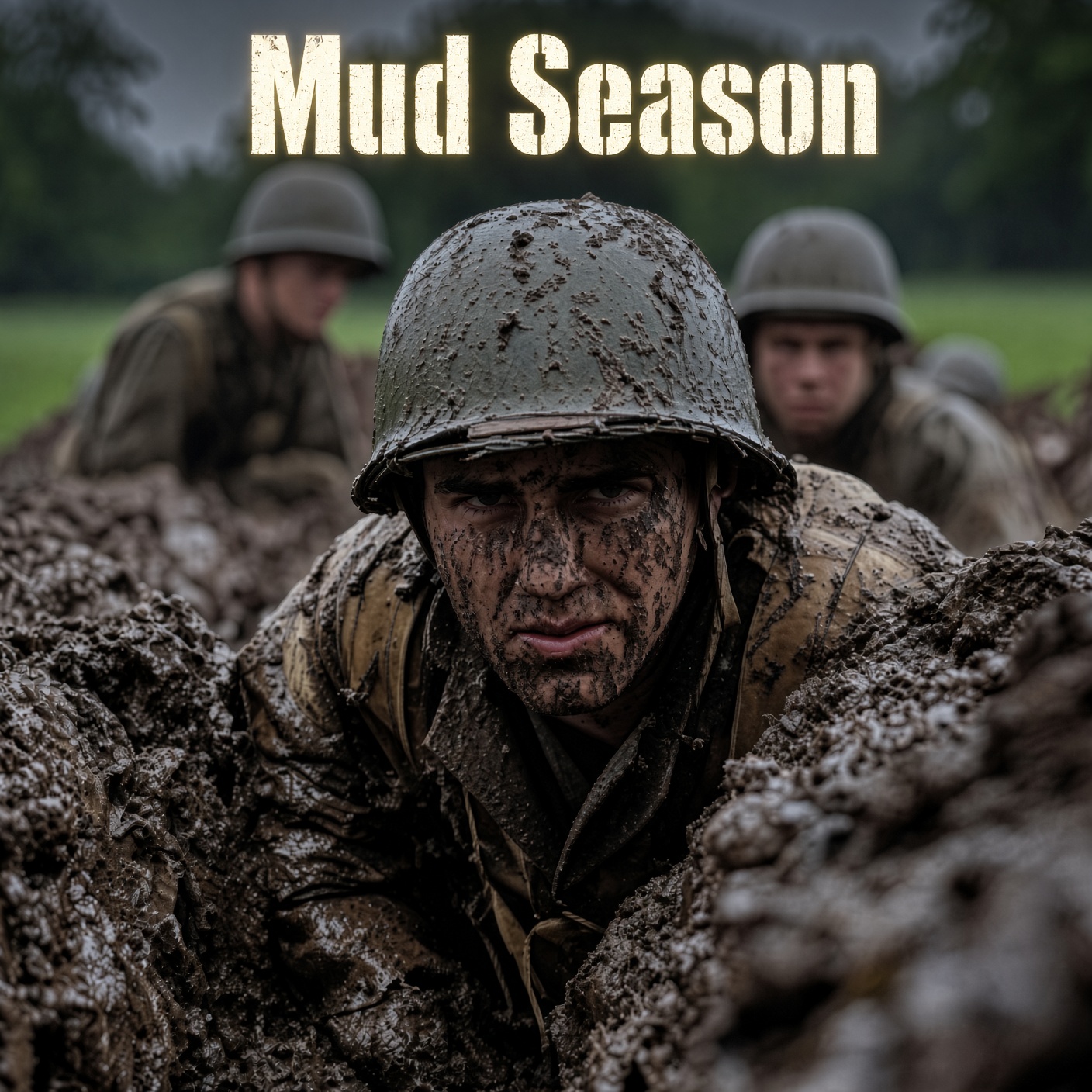
One of the most remarkable features of the German invasion in 1941 was the autumn mud season, known in Russia as rasputitsa. The rains came, the roads became saturated, and the ground turned into deep mud. Heavy vehicles struggled to move. Trucks carrying fuel, food, ammunition, and medical supplies became stuck. The farther the army advanced, the more difficult it became to maintain its supply lines. Men at the front desperately needed provisions, but the provisions could not always reach them. The supplies existed somewhere behind the lines, but the roads between the supply and the need had become almost impassable.
And here is what has been stirring in my heart: What happens when the oil is needed, the vessels are waiting, but the road between them has become impassable?
Church, I am concerned about a generation that desperately needs the things of God. I see people who are tired. I see families struggling to survive. I see ministers who have carried burdens for years and are becoming weary. I see young people trying to find their way in a world filled with confusion. I see people who love God but have never been taught how to endure hardship. And I am reminded that it is possible to possess tremendous resources and still fail to get those resources to the people who need them.
The mud season teaches us something about preparation. An army can be advancing while its ability to endure is declining. It can appear successful on the battlefield while its supply lines are becoming weaker every day. And I wonder whether the Church sometimes measures its strength by the wrong things. We measure attendance, buildings, finances, and activity. Those things may have their place, but they do not always reveal whether we are preparing disciples who can endure suffering, stand upon the Word of God, and remain faithful when circumstances become difficult.
I am not saying that every hardship is a sign of some approaching catastrophe. I am saying that the Word of God has always instructed His people to be watchful, wise, and prepared. Jesus never promised that following Him would exempt us from suffering. In John 16:33, He told His disciples that they would have tribulation in the world, but He also told them to be of good cheer because He had overcome the world. Our confidence is not that difficult seasons will never come. Our confidence is that Jesus Christ remains faithful in every season.
This brings me to Joseph in Genesis chapter 41. Pharaoh had dreamed of seven years of abundance followed by seven years of famine. God gave Joseph understanding concerning those dreams. But what fascinates me is that Joseph did not stop with the interpretation. He began to speak about preparation. He advised Pharaoh to appoint a discerning and wise man, establish oversight, gather food during the years of plenty, and store it against the coming famine. Joseph understood that knowing a famine was coming would not feed one hungry child. There had to be a strategy for preserving and distributing the provision.
Revelation without responsible preparation can leave people knowing about a crisis without being equipped to face it.
Church, we need more than people who can announce that difficult days may be ahead. We need mature men and women who can help prepare the people of God. We need those who can teach the Scriptures, strengthen the weak, encourage the discouraged, disciple the young, and recognize the gifts God has placed within the next generation. We need wisdom that knows how to organize the work, share responsibility, and ensure that ministry continues when circumstances change.
And this is where prophetic strategy becomes so important. Prophetic ministry is not merely about announcing future events. According to 1 Corinthians 14:3, prophecy is associated with edification, exhortation, and comfort. The Church must be strengthened, encouraged, and built up. Prophetic ministry must remain subject to the Word of God and accountable to the discernment of mature believers. If we claim to hear from heaven but neglect the people standing before us, we have missed something essential about the heart of ministry.
I have been thinking deeply about prophetic presbytery. First Timothy 4:14 tells us that Timothy received ministry through prophecy with the laying on of hands by the eldership, called the presbytery in the King James Version. Here we see mature spiritual leadership involved in recognizing and affirming the gift within a younger minister. In Acts 13, prophets and teachers were gathered at Antioch, ministering to the Lord and fasting. As they worshiped, the Holy Spirit directed that Barnabas and Saul be separated for the work to which He had called them. The leaders prayed, fasted, laid hands upon them, and sent them forth.
Notice the order. They ministered to the Lord before they ministered to one another. They listened before they sent. They recognized the work of the Holy Spirit before they acted. This was not a gathering built around personalities or titles. It was a gathering of mature ministers seeking to obey God.
I believe there is a great need for this kind of spiritual maturity in the Church. We need fathers and mothers in the faith who are not threatened by the gifts of the younger generation. We need experienced ministers who are willing to recognize, nurture, correct, encourage, and release those whom God is raising up. We need leaders who understand that their greatest accomplishment may not be what they personally build, but what continues after their own season of leadership has ended.
That brings me to Samuel.
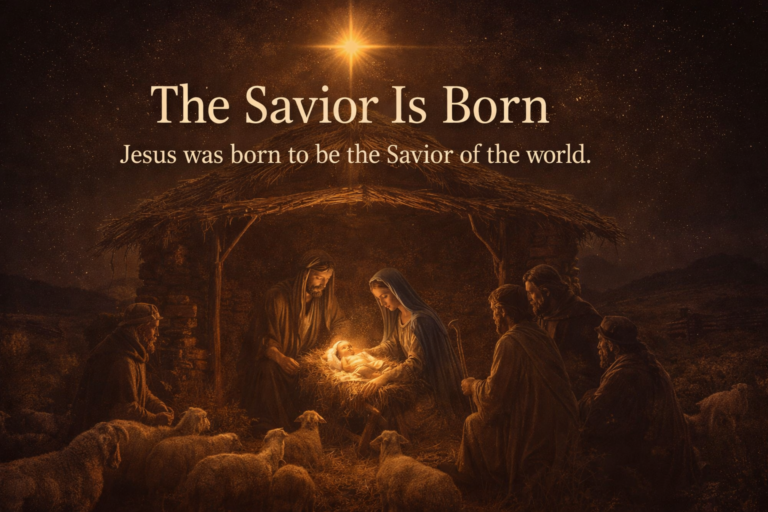
In 1 Samuel 16:1, the Lord spoke to Samuel and told him to fill his horn with oil and go to Bethlehem because He had provided Himself a king among Jesse\'s sons. Samuel had mourned over Saul, but God was directing him toward the future. There was another generation to recognize. There was another assignment to fulfill. There was still oil to be poured.
When Samuel arrived at Jesse\'s house, the sons began passing before him. Eliab looked impressive, but God had not chosen him. One after another, Jesse\'s sons stood before Samuel, but the Lord had not selected any of them. Finally, Samuel asked whether all the young men were present. Jesse explained that the youngest was still keeping the sheep.
David was in the field.
He was not standing behind a pulpit. He was not sitting upon a throne. He was not commanding an army. He was keeping sheep, faithfully carrying out responsibilities that seemed insignificant compared with the calling that awaited him. But God knew exactly where David was.
And Samuel would not proceed until David was brought before him.
Church, we must never become so impressed with those standing on the platform that we overlook those God is preparing in the field.
There are young David’s who have not yet discovered the full measure of their calling. Some are sitting in our congregations. Some are serving quietly. Some are still struggling to understand what God has placed within them. They need someone who can recognize their potential without flattering them, teach them without controlling them, and prepare them without trying to live their lives for them.
Samuel took the horn of oil and anointed David in the midst of his brothers. First Samuel 16:13 tells us that the Spirit of the Lord came upon David from that day forward.
But listen carefully. Samuel\'s responsibility was not to become David. Samuel\'s responsibility was to obey God concerning David.
The horn was in Samuel\'s hand, but the future belonged to God.
And there is something else we must understand. David\'s anointing did not mean that all his hardships were over. He would face Goliath. He would experience rejection, danger, betrayal, and years of uncertainty. He would learn how to live in caves before he ever sat upon the throne. The oil upon his head did not exempt him from the difficult seasons ahead.
This is why I believe we must prepare the next generation for more than moments of spiritual excitement. We must teach them how to endure. We must teach them how to pray when answers seem delayed, how to remain faithful when they are misunderstood, and how to obey God when nobody is applauding them.
We cannot simply prepare a generation to receive the mantle. We must prepare them to carry the responsibility that comes with it.
And now I want to take you somewhere else in Samuel\'s life. In 1 Samuel 19, David was fleeing from Saul, and he went to Samuel at Ramah. Together they went to Naioth, where a company of prophets was gathered under Samuel\'s leadership. Scripture does not tell us every detail about the organization of that prophetic community, but it reveals something important. Samuel\'s influence extended beyond a single prophetic encounter. He was associated with a company of prophets, and David found refuge there during a dangerous season of his life.
Think about that. Samuel had anointed David in Bethlehem, but later David came to Samuel during a time of trouble.
The man who had poured the oil was also there when the young man carrying the anointing needed refuge.
Church, that speaks to me. We need more than places where young ministers can receive a prophetic word. We need places where they can grow, learn, recover, and mature. We need spiritual homes where those who are struggling can find prayer, sound counsel, correction, encouragement, and love. We need prophetic communities where the presence of God is more important than the reputation of any individual.
The next generation needs more than someone to pour oil upon them. They need somewhere to grow roots.
And that brings me back to the mud season.
What happens when the roads become impassable? What happens when the methods we have depended upon no longer work? What happens when a pastor becomes exhausted, a congregation faces hardship, or a young minister encounters a crisis for which he has never been prepared?
If everything depends upon one man, the ministry becomes vulnerable when that man can no longer carry the load. If every responsibility rests upon one generation, the work becomes vulnerable when that generation passes from the scene.
This is why succession planning is not a worldly concept that the Church must fear. It is a principle we can recognize throughout Scripture.
Moses prepared Joshua. Elijah was followed by Elisha. Paul invested in Timothy. And in 2 Timothy 2:2, Paul instructed Timothy to entrust what he had learned to faithful people who would be able to teach others also.
Paul was thinking beyond Timothy\'s lifetime. He was thinking about the continuation of the gospel through future generations.
And I want to say something to every mature minister who has served God for many years. There comes a time when we must ask ourselves whether we are preparing anyone to continue the work.
Have we taught them what we know?
Have we shown them how to pray?
Have we helped them understand the Scriptures?
Have we taught them how to handle disappointment, temptation, opposition, and responsibility?
Have we allowed them opportunities to grow?
Or have we become so occupied with carrying the horn that we have forgotten the oil was meant to be poured?
I do not want to leave this world with a full horn and an empty generation.
I want to pour faithfully into those God places before me. I want to see young men and women discover their calling. I want to see pastors raised up, evangelists sent out, teachers established, and prophetic ministers developed with humility, wisdom, and biblical accountability. I want to see churches planted that I will never pastor. I want to see a generation that loves Jesus more than it loves recognition.
But I also understand that I cannot give another person my personal surrender. I can teach them how to pray, but I cannot pray their prayers for them. I can show them the importance of the altar, but I cannot live their consecration. I can encourage them to obey God, but I cannot carry their obedience.
The oil belongs to God. The vessels belong to God. And the future belongs to God.
Church, I do not know every challenge that lies ahead of us. I cannot tell you exactly what tomorrow will bring. But I know that the Church has a responsibility today. We must preach the gospel, make disciples, care for the wounded, strengthen the weary, and prepare faithful people to carry the work forward.
We cannot wait until the roads are covered in mud before we begin thinking about how the supplies will reach the people.
We cannot wait until the famine arrives before we begin preparing the storehouses.
We cannot wait until a generation is gone before we begin preparing the next one.
And we cannot wait until midnight before we begin thinking about the oil.
Matthew 25 tells us that the wise virgins had made preparation before the midnight cry was heard. When the bridegroom came, they were ready. Their readiness was not something they could borrow at the last moment.
There were lamps, there were vessels, and there was oil. But the preparation had to be made before the hour arrived.
I hear the warning in that passage, but I also hear the invitation. There is still time to be faithful with what God has entrusted to us today. There is still time to disciple. There is still time to strengthen. There is still time to prepare.
And I want to close with this thought...
The mud may stop the machinery, but it must not stop the ministry. The seasons may change, but Jesus Christ remains the same. Our methods may have to change, our responsibilities may have to be shared, and our plans may have to be adjusted, but our calling to love God and reach people remains.
I do not want to be a man who only recognizes the changing seasons.
I want to be a man who faithfully prepares those entrusted to my care.
I want to be like Joseph, who understood the importance of preparing during the years of plenty.
I want to be like Samuel, who carried the horn of oil to the one God had chosen.
I want to be like Paul, who understood that the gospel must be entrusted to faithful people who could teach others also.
And when my own season of ministry is finished, I want there to be people still standing, still preaching, still praying, still loving the broken, and still carrying the gospel of Jesus Christ.
Because the purpose of the horn was never to preserve the oil for itself. The purpose was to pour it where God directed.
Church, there is still oil in the horn.
There are still sons and daughters in the field.
There are still wounded people who need someone to reach them.
There are still young ministers who need someone to believe in them, teach them, and help them grow.
And there is still a harvest that belongs to the Lord.