Screenshot
Lesson 4
Jesus: The Great “I AM”
All that Jesus Christ claimed about Himself is true.
Lesson Four Video
THE LESSON OVERVIEW
An important conversation between Jesus and Jewish leaders—where He emphasizes the life-changing power of abiding in His Word, the freedom found in truth, and the essence of true discipleship—takes place in John 8:31-59.
Jesus challenges His audience to look beyond their physical lineage from Abraham, urging instead spiritual faith and obedience.
The tension peaks as Jesus boldly declares, “Before Abraham was, I am” (v. 58), asserting His divine nature and eternal existence.
This profound statement reveals His unity with God while intensifying the opposition to His ministry.
Today’s study carries deep theological themes of truth, freedom, and Christ’s mission.
TEACHING GOALS
1. Impart and Reinforce Knowledge:
Help the students understand the meaning and significance of Jesus’ claim to be the Great “I AM.”
2. Influence Attitudes:
Cultivate among students the humility to recognize their need to follow Jesus’ teachings in Spirit and in truth.
3. Influence Behavior:
Encourage the students to abide in Christ’s Word through a diligent study of the Gospel of John.
ADULT TEACHING RESOURCES
THE LESSON OUTLINE
See your Adult Teaching Resources book.
For use with this lesson, there is one info sheet and one worksheet (front and back, one page).
You will need to make photocopies for your class.
Determine how and when you will use these resources for the lesson today, whether in class as a complement to the lesson, or as a take-home learning resource.
1. FOLLOW CHRIST ABOVE GREAT LEADERS
John 8:31-40
A. The Gracious Offer of Freedom (31-32)
B. The Undeniable Reality of Bondage (33-40)
2. THE DEPTHS OF DECEPTION
John 8:41-53
A. The Question of Fatherhood (41-43)
B. The Father of Lies (44-53)
3. TRUST THE “I AM.”
John 8:54-59; Exodus 3:13-14
A. The Faithful Son (John 8:54-55)
B. The Great “I AM” (John 8:56-59; Exodus 3:13-14)
HISTORICAL-LITERARY BACKGROUND
In John 8, Abraham is a central figure, referenced multiple times to connect themes of faith, freedom, and fatherhood.
The chapter ends after Jesus declares, “Before Abraham was, I am” (v. 58), causing the Jews to want to stone Him.
The Jews claimed Abraham as their father by physical descent, but Jesus challenged this by emphasizing faith over lineage.
In the New Testament, kinship with Abraham is defined either by being his physical descendant or by sharing his faith (Romans 4:12, 16).
Jesus exposed their lack of faith, stating that their spiritual father was not Abraham but the devil, who is a liar and murderer.
GOLDEN TEXT: John 8:58
Jesus said unto them, Verily, verily, I say unto you,
Before Abraham was, I am. (KJV)
Jesus said to them, “Most assuredly, I say to you,
before Abraham was, I AM.” (NKJV)
THE HOLY SCRIPTURES
King James Version
John 8:33 They answered him, We be Abraham’s seed, and were never in bondage to any man: how sayest thou, Ye shall be made free?
34 Jesus answered them, Verily, verily, I say unto you, Whosoever committeth sin is the servant of sin.
35 And the servant abideth not in the house for ever: but the Son abideth ever.
37 I know that ye are Abraham’s seed; but ye seek to kill me, because my word hath no place in you.
38 I speak that which I have seen with my Father: and ye do that which ye have seen with your father.
39 They answered and said unto him, Abraham is our father. Jesus saith unto them, If ye were Abraham’s children, ye would do the works of Abraham.
40 But now ye seek to kill me, a man that hath told you the truth, which I have heard of God: this did not Abraham.
46 Which of you convinceth me of sin? And if I say the truth, why do ye not believe me?
47 He that is of God heareth God’s words: ye therefore hear them not, because ye are not of God.
48 Then answered the Jews, and said unto him, Say we not well that thou art a Samaritan, and hast a devil?
49 Jesus answered, I have not a devil; but I honour my Father, and ye do dishonour me.
50 And I seek not mine own glory: there is one that seeketh and judgeth.
51 Verily, verily, I say unto you, If a man keep my saying, he shall never see death.
52 Then said the Jews unto him, Now we know that thou hast a devil. Abraham is dead, and the prophets; and thou sayest, If a man keep my saying, he shall never taste of death.
53 Art thou greater than our father Abraham, which is dead? and the prophets are dead: whom makest thou thyself?
56 Your father Abraham rejoiced to see my day: and he saw it, and was glad.
57 Then said the Jews unto him, Thou art not yet fifty years old, and hast thou seen Abraham?
58 Jesus said unto them, Verily, verily, I say unto you, Before Abraham was, I am.
59 Then took they up stones to cast at him: but Jesus hid himself, and went out of the temple, going through the midst of them, and so passed by.
(Note: Only representative verses for the lesson are printed here.)
INTRODUCING THE LESSON
Ask the students, How would you define debate?
After various responses, share the following definition:
A debate is “a structured discussion in which two or more sides present and respond to each other’s viewpoints on a specific topic.”
In a formal debate, there are typically at least three key participants:
(1) the individual who argues in favor of a particular claim or set of claims,
(2) the individual who argues against that claim or claims, and
(3) the person responsible for judging the quality and effectiveness of the arguments presented.
In the text for this lesson, John documents a debate between Jesus and the Jews.
As we read this encounter, consider how Jesus won this debate.
EXPLORING THE SCRIPTURES
1. FOLLOW CHRIST ABOVE GREAT LEADERS
John 8:31-40
A. The Gracious Offer of Freedom
John 8:31-32
Jesus addresses the Jews who believed in Him, extending an invitation to become His disciples by urging them to abide in His teaching.
To “continue” (v. 31) in His Word signifies more than intellectual acknowledgment; it requires a steadfast commitment to living out His principles daily.
Jesus promised that such dedication would lead to knowing the truth, and this truth would bring life-changing freedom.
True discipleship is marked not merely by belief but by consistent obedience to Christ’s teachings.
This abiding relationship fosters a deeper understanding of divine truth, which liberates us to follow Jesus’ leading through His Word.
The freedom Jesus offers is not confined to external circumstances but will penetrate our souls, delivering us from fear, guilt, and deception.
Furthermore, the passage illustrates the inherent link between obedience and revelation.
True freedom is not found in self-reliance or independence but in submission to God’s Word and alignment with His divine purpose.
This freedom transcends worldly constraints, offering a profound spiritual liberation that redefines our identity and priorities.
These verses challenge us to evaluate our faith journey, urging us to reflect on our commitment to Christ’s teachings.
Genuine discipleship is marked by an unwavering pursuit of truth, where obedience becomes the pathway to lasting freedom.
In this way, the passage serves as both an invitation and a call to action, encouraging us to follow Him.
The Jews saw themselves as the offspring of Abraham and followers of the Mosaic Law, but Jesus offered them much more.
Discussion Points
—What does it mean to “continue” in Jesus’ teaching? What kind of change would this require of the Jewish religious leaders?
—How can we discern the truth of the Gospel and apply it amid all the deception in our world?
B. The Undeniable Reality of Bondage
John 8:33-40
The Jews, including those who claimed to believe in Jesus, were offended by His offer of freedom from sin.
As the physical descendants of Abraham, they adamantly denied they were or had ever been slaves (v. 33).
Their response revealed the depth of their deception and the extent of their prideful self-righteousness.
Jesus replied bluntly, “Whoever commits sin is a slave of sin” (v. 34 NKJV).
He established a truth that Paul would later elaborate on in his Letter to the Romans: Humanity’s undeniable bondage to sin and their stubborn attempts to justify themselves.
The Jews in John 8 were blinded by their pride of being the offspring of Abraham.
They asserted their freedom based on their lineage, yet Jesus challenged their understanding of freedom, emphasizing that it comes from abiding in His teaching and being liberated from sin.
He pointed out the inconsistency between their claim to Abrahamic heritage and their actions, which contradicted the faith and obedience exemplified by Abraham.
Jesus said their intention to kill Him revealed a more profound spiritual disconnect as they failed to embrace the truth He taught.
This passage demonstrates the distinction between physical descent and spiritual identity.
Jesus confronted the presumption that heritage alone makes one righteous, redirecting the focus to faith and obedience to God’s will.
It serves as a reminder that true discipleship is marked not by external identity, such as denominational membership or observance of church rituals, but by a transformed heart that reflects God’s truth.
The tension in this encounter reveals the human tendency to cling to superficial assurances while resisting the supernatural power of divine truth, calling us to examine our faith and alignment with Christ’s teachings.
Discussion Points
—As the Bible consistently points out, self-righteousness can be a real problem. How can we avoid this pitfall?
—Why do you suppose the scribes and Pharisees focused on their lineage from Abraham rather than accepting and following Jesus and His teaching?
RESPONSE TO THE WORD
Philip Yancey wrote, “When Jesus came to earth, demons recognized Him, the sick flooded to Him, and sinners doused His feet and head with perfume. Meanwhile, He offended pious Jews with their strict preconceptions of what God should be like. Their rejection makes me wonder, could religious types be doing just the reverse now? Could we be perpetuating an image of Jesus that fits our pious expectations but does not match the person portrayed so vividly in the Gospels?”
We should continually seek a growing understanding of who Jesus is by prayerfully reading God’s Word and studying Scripture with others.
2. THE DEPTHS OF DECEPTION
John 8:41-53
A. The Question of Fatherhood
John 3:41-43
Much of the debate between Jesus and the Jews centered on the question of fatherhood, with the Jews claiming both Abraham and God as their father.
Jesus refuted both claims and, based on their attitudes and actions, pointed to the devil as their real father.
The promise to Abraham was that he would be the “father of many nations” (Genesis 17:4).
Historically, Abraham had many natural descendants, like the stars in the heavens (15:5).
The promise, however, also had spiritual implications that were often overlooked by some of the Jews.
A person must exercise faith in God to be Abraham’s true descendant and heir.
Abraham is the father of those who believe and obey God unconditionally.
To think otherwise had resulted in continued spiritual bondage rather than freedom in the lives of people who had physically descended from Abraham.
As to their claim to be the children of God, Jesus said these Jews were disqualified because they did not meet the most critical requirement: They did not believe or love the One whom God sent (John 5:38).
Although John wrote in Greek, his cultural background was Hebraic.
This is important because the Hebrew word for truth used in the Old Testament is closely related to the concepts of faith and trust.
For something to be true, it must be reliable, faithful, and trustworthy.
Because Jesus is the embodiment of truth, He alone is the trustworthy source of truth that leads to spiritual freedom and eternal life.
Discussion Points
—Why do you suppose Jesus explained He did not come of His own accord, but that the Father sent Him?
—Describe a time when you had difficulty understanding a passage or verse in the Bible and how the Holy Spirit helped you.
B. The Father of Lies
John 8:44-53
Jesus boldly confronted the religious leaders, exposing their bondage to sin and identifying their spiritual lineage as stemming from the devil.
He revealed the depth of their deception by uncovering both their motives and the source of their lies.
First, Jesus explained that their desire to kill Him came from their obedience to their father, the devil, who was “a murderer from the beginning” (v. 44; see Genesis 4:8-9; 1 John 3:12, 15).
Despite their claims of being children of Abraham and God, their thoughts, desires, and actions betrayed them.
Their murderous intent would be fully realized in their later cries of “Crucify Him, crucify Him” (John 19:6).
Second, Jesus unmasked the root of their self-deception by exposing the lies they believed—lies originating from the devil, who is “the father of lies” (8:44 NIV).
Their pattern of falsehoods was evident throughout their debate with Jesus.
While they appeared to believe in Him, they rejected His teachings, refusing His offer of discipleship and spiritual freedom.
They claimed to be free, yet they were enslaved by sin.
They boasted of being Abraham’s descendants, yet their unbelief contradicted Abraham’s faith.
They professed to be children of God but demonstrated through their actions that they were offspring of the devil.
Ironically, while accusing Jesus of being demon-possessed, they mirrored the characteristics of the devil.
This passage highlights the profound contrast between truth and deception, freedom and bondage.
It ultimately highlights the necessity of aligning our hearts and actions with the truth of Christ to escape spiritual enslavement.
Jesus’ words serve as both a warning and an invitation to examine the source and focus of our beliefs and loyalties.
Discussion Points
—In what ways do you see the devil’s deception at work today?
—The problem with deception is that those deceived fail to recognize it. How can we, as Christians, help keep one another from deception?
RESPONSE TO THE WORD
Fathers play a vital role in shaping the atmosphere and dynamics of a home.
Their presence should bring a sense of security, strength, and guidance that fosters emotional and mental stability for the family.
Through teaching life lessons, sharing laughter, and being a steady source of support, godly fathers influence their children’s values, confidence, and resilience.
Their ability to balance love with discipline helps create a nurturing environment where children feel encouraged and grounded.
Fathers also set an example, shaping the generations that follow.
The example of Abraham had been a good one, an example of faith, but through the centuries and down to Jesus’ day, the Jewish people clung to the name but had forgotten the examples of their forefathers.
3. TRUST THE “I AM”
John 8:54-59; Exodus 3:13-14
A. The Faithful Son
John 8:54-55
Although the Jews ultimately rejected Jesus and His message, there was and is One who bears witness to Jesus and the legitimacy of His ministry: God the Father.
Jesus clarified He was not trying to glorify Himself, although His claims to know God and to have been alive before Abraham may have seemed like it.
However, this was not an empty boast by Jesus; these claims were statements of fact.
One either believes them or not.
Jesus would have lied like them if He denied His relationship with the Father.
The One who glorifies Him is God the Father.
As to the outcome of the debate between Jesus and the Jews, Jesus pointed to God as the judge who would determine who was right and who was wrong.
The Father honors Jesus because He is the faithful Son who does only what He sees the Father doing (John 5:19).
Jesus not only knows the Father; He keeps the Father’s word (8:55).
The statements and claims Jesus makes in this debate are not merely intellectual assertions about some abstract truth; they are rooted in the knowledge and experience of someone who walked in faithfulness and righteousness and did not deviate from the will of God.
This is why the Father glorified Him.
Whereas Israel was the unfaithful son who strayed from the Lord (Hosea 11:1-2), Jesus is the faithful Son who fulfills all the commandments and promises of the Father.
Discussion Points
—Jesus told the Jews that they had not known the Father, yet they were instructed in the Hebrew Scriptures. In what sense could Jesus claim that they do not know God?
—What can we learn from how Jesus engaged in debate with the Jews as we seek to present the Gospel to others?
B. The Great “I AM”
John 8:56-59; Exodus 3:13-14
Jesus’ debate with the Jews culminated in two stunning revelations that enraged the Jews against Him.
First, Jesus declared that Abraham “rejoiced to see My day, and he saw it and was glad” (v. 56 NKJV).
The New Testament refers to the longing of many prophets, righteous men and women, and kings who longed to see and hear the things Jesus was saying and doing during His life (Matthew 13:17; Hebrews 11:13).
The vision of Abraham was different, however, because he saw and heard the days of Jesus.
He saw the fulfillment of God’s promises in a specific person, one of his descendants: Jesus (Galatians 3:7-9).
The second, and by far, the most significant revelation, however, occurred when Jesus answered the question, “Are You greater than our father Abraham? . . . Who do You make Yourself out to be?” (v. 53 NKJV).
Jesus replied, “Before Abraham was, I AM” (v. 58).
According to Exodus 3, God revealed His name to Moses: “I AM WHO I AM,” (v. 14), “the Lord [Yahweh] God of your fathers” (v. 15).
God’s name is I AM.
Therefore, there is no more explicit statement in the New Testament of Christ’s divine nature than John 8:58.
The scribes and Pharisees clearly understood this statement because they immediately sought to stone Him for blaspheming the name of God (Leviticus 24:16).
Because Jesus is Yahweh, the Great “I AM,” all that He claimed about Himself was true.
Discussion Points
—Why do you suppose God proclaimed the Gospel to Abraham, giving him a clear vision of God’s promise in Christ?
—How would you explain the divinity of Christ to an unbeliever or a new believer using this story as a guide?
RESPONSE TO THE WORD
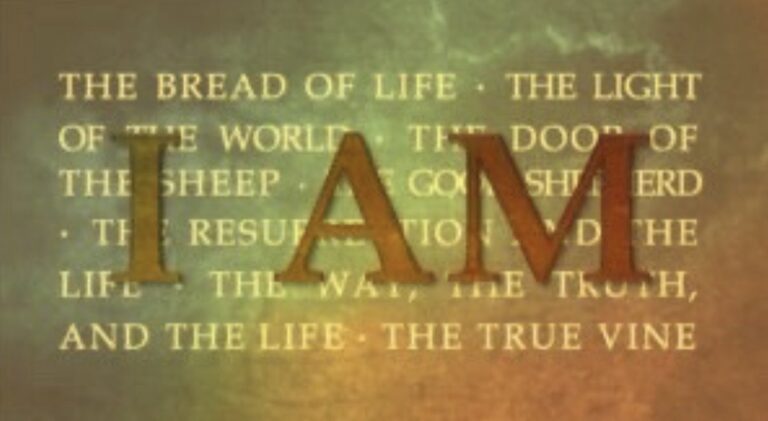
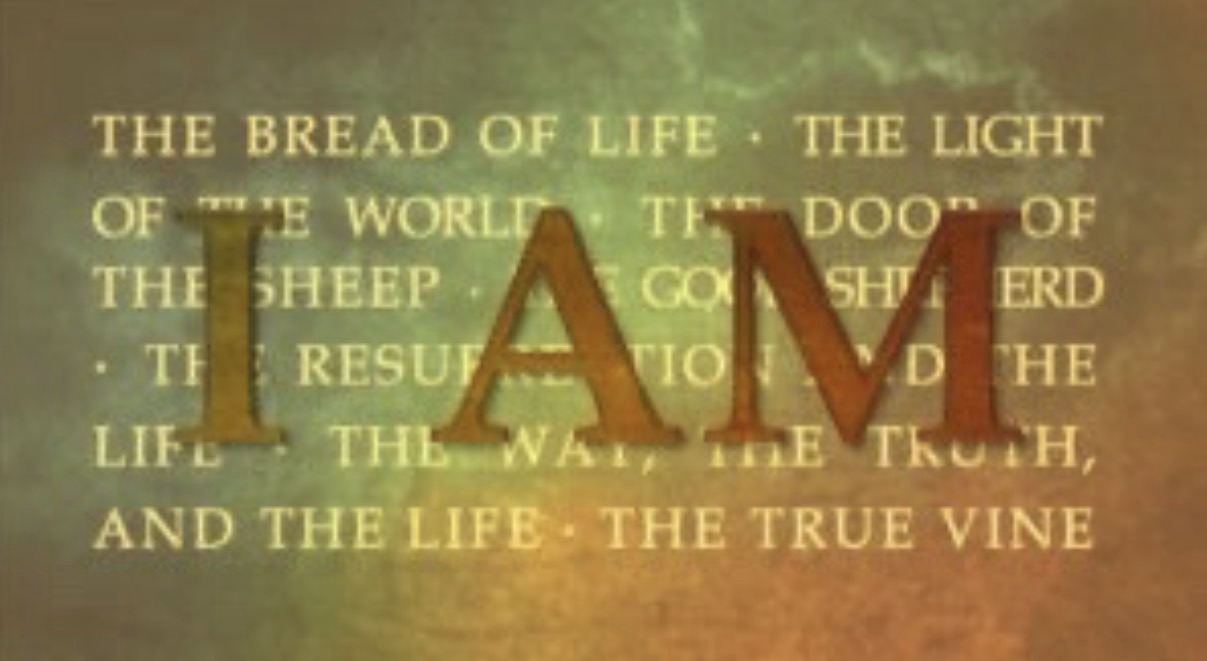
There are seven places in the Gospel of John where Jesus used the declarative “I AM”:
“I am the bread of life” (John 6:35, 48);
“I am the light of the world” (8:12);
“I am the door of the sheep” (10:7);
“I am the good shepherd” (10:11);
“I am the resurrection and the life” (11:25);
“I am the way, the truth, and the life” (14:6);
“I am the true vine” (15:1).
The number seven is significant in Biblical studies in that it indicates completion or fulfillment.
With seven “I AM” statements, the human Jesus reveals He is also fully God.
This powerful truth encourages faith and trust in His teachings, which brings freedom from sin.
The scribes and Pharisees did not receive the teaching of Jesus, thus revealing they might have been religious, but they were “not of God” (John 8:47).
If we are of God, we will hear and obey His words.
CALL TO DISCIPLESHIP
Everything Jesus claimed about Himself is true.
This gives us great confidence as His followers.
Jesus is the perfect guide to a fulfilling life.
We don’t have to look any further than Him.
MINISTRY IN ACTION
The best way to point others to redeeming truth is by walking in Christ’s footsteps, practicing the truth He embodied, and living the abundant life He promised His followers.
DAILY BIBLE READINGS
M. Abram Obeys the Lord’s Call.
Genesis 12:1-5
T. The Lord of Hosts Directs Joshua.
Joshua 5:13-15
W. The King of Glory.
Psalm 24:7-10
T. The Great Confession.
Matthew 16:13-17
F. Jesus Is the Only Way.
John 14:1-6
S. Preeminence of Jesus Christ.
Colossians 2:9-18
\0\0
About the Author